
Introduction
Understanding Anxiety and the Need for Support
Anxiety is a common mental health challenge that affects people in Vancouver and around the world. Symptoms can range from constant worrying to physical discomfort that interferes with everyday life. Seeking support from a trained anxiety therapist can be a key step toward better mental health and well-being. Finding the right therapist can make a significant difference in the healing process.
The journey to managing anxiety often begins with recognizing the need for professional help. Many seeking relief from anxiety may feel overwhelmed by the number of therapy options available in Vancouver. Making the right choice is important for personal growth and comfort in treatment.
Why Choosing the Right Therapist Matters
Not every therapist is the right fit for every person. Therapists use different approaches and have unique personalities and training backgrounds. The relationship between a therapist and client is central to successful treatment. Comfort, trust, and understanding are all crucial in this partnership.
A good anxiety therapist in Vancouver can help you develop healthy coping strategies. They can also guide you through the process of addressing the root causes of anxiety. The ideal therapist creates a safe and supportive environment for you to express your thoughts and feelings.
The Search for the Perfect Anxiety Therapist in Vancouver
Vancouver offers a variety of therapy options, which can be both helpful and overwhelming. From cognitive behavioral therapy to mindfulness-based approaches, there are many paths to addressing anxiety. The first step is to identify your needs and preferences.
Taking time to research and consider your options is vital. Look for therapists in Vancouver who have experience working with anxiety. Consider their professional credentials, therapy style, and areas of specialization. This approach increases the chance of finding a therapist who aligns with your needs.
Identifying Your Needs
Understanding Your Anxiety
Start by looking at how anxiety affects your daily life. Notice the situations that trigger your symptoms most. Some people feel anxious in social settings, while others worry about health or work. Identifying these triggers helps you find a therapist who understands your specific concerns. Make a list of your main symptoms, both emotional and physical. Include things like racing thoughts, muscle tension, or trouble sleeping.
Consider the impact your anxiety has on your routines. Does it affect your relationships or work performance? Understanding the severity and frequency of your symptoms lets you communicate your needs effectively. Not all anxiety therapists in Vancouver have the same approach. Knowing what you struggle with is helpful for matching with the right support.
Clarifying Therapy Goals
Take time to define what you hope to achieve in therapy. Some people want coping strategies for panic attacks or social anxiety. Others may want to explore the root causes of their worries. Write down your goals to bring them up during your initial consultation. This can help guide your search for the perfect anxiety therapist in Vancouver.
You might want to focus on learning mindfulness techniques or cognitive behavioral therapy. Other clients look for emotional support without a structured program. Deciding whether you prefer short-term solutions or long-term personal growth is an important step. Be honest about your expectations so your therapist knows how to help.
Assessing Personal Preferences and Logistics
Think about what makes you comfortable in a therapy setting. Some people feel best with a therapist who shares a similar cultural background. Others might prefer virtual sessions to fit a busy schedule. The location of your anxiety therapist in Vancouver can be a major factor if you need in-person care.
Consider your availability for sessions, and whether you prefer morning or evening appointments. Cost and insurance coverage often play a role in your decision. Make a list of your “must-haves” and “nice-to-haves” in a therapist. When you identify these preferences early, it narrows your search and leads to a better match.
Researching Potential Therapists
Where to Begin Your Search
Start by asking for recommendations from friends, family, or your doctor. These people can share personal experiences and suggest trusted professionals. Online therapist directories like Comfy Couch Counselling and TherapyTribe list therapists in Vancouver. These directories let you filter by specialty, location, and insurance. Many therapist websites have information about their background and approach. Check these sites to learn about their experience with anxiety therapy.
You can also visit local mental health organizations’ websites. Groups like Anxiety Canada or the BC Psychological Association offer lists of qualified professionals. Search for therapists who specialize in anxiety or cognitive-behavioral therapy. This focus ensures they have the skills to address anxiety issues effectively.
Evaluating Credentials and Experience
Look for therapists who are registered with recognized bodies. In Vancouver, this includes the BC Association of Clinical Counsellors or the College of Psychologists of BC. A therapist’s qualifications and training are important for effective anxiety treatment. Check if they have experience helping people with anxiety disorders or related concerns.
Ask about their therapeutic approach during your search. Some therapists use cognitive-behavioral therapy, mindfulness, or exposure therapy for anxiety. Their experience in these methods can make a difference in your progress. Read reviews and testimonials if available. Feedback from other clients gives insight into their style and effectiveness.
Making Contact and Asking Questions
Reach out to potential therapists through email or phone. Many offer a free consultation to discuss your needs and answer questions. Prepare a list of questions about their approach, availability, and session fees. Ask if they have experience with situations similar to yours. This helps ensure a comfortable and productive relationship.
Consider how you feel during your first interaction. Comfort and understanding are important for successful anxiety therapy. Take notes on your impressions and compare different therapists. This process helps you find the best therapist for your needs in Vancouver.
Interviewing Therapists
Preparing for the First Conversation
Before meeting with potential anxiety therapists in Vancouver, preparation helps. Make a list of your key concerns. Think about your therapy goals and write down questions. Consider what qualities or expertise matter most to you. Having these notes reduces stress during the actual interview.
Some focus areas might include experience with anxiety disorders, therapeutic approaches, or scheduling flexibility. You want to feel comfortable asking anything. An organized list can help keep the initial conversation clear and focused.
Key Questions to Ask
Start by asking about the therapist’s qualifications and experience. For example, “How much experience do you have treating anxiety?” Inquire about their primary therapeutic modalities, such as CBT, mindfulness, or exposure therapy. Ask how they measure progress and what a typical session looks like.
It’s helpful to discuss logistics, too. Ask about fees, insurance, and appointment times. Check if they have experience with your specific anxiety symptoms. This information will help you compare anxiety therapists in Vancouver.
Assessing Comfort and Communication Style
Pay attention to how you feel during the conversation. Do you feel heard and respected? Is the therapist open, clear, and patient? Comfort and trust are essential for progress. Notice if their answers align with your needs and values.
Evaluate their communication style. A good anxiety therapist should explain concepts in a way you understand. They should ask questions that help clarify your situation. If you feel supported and understood, you are more likely to build a strong therapeutic relationship.
Conclusion
Key Takeaways for Selecting an Anxiety Therapist
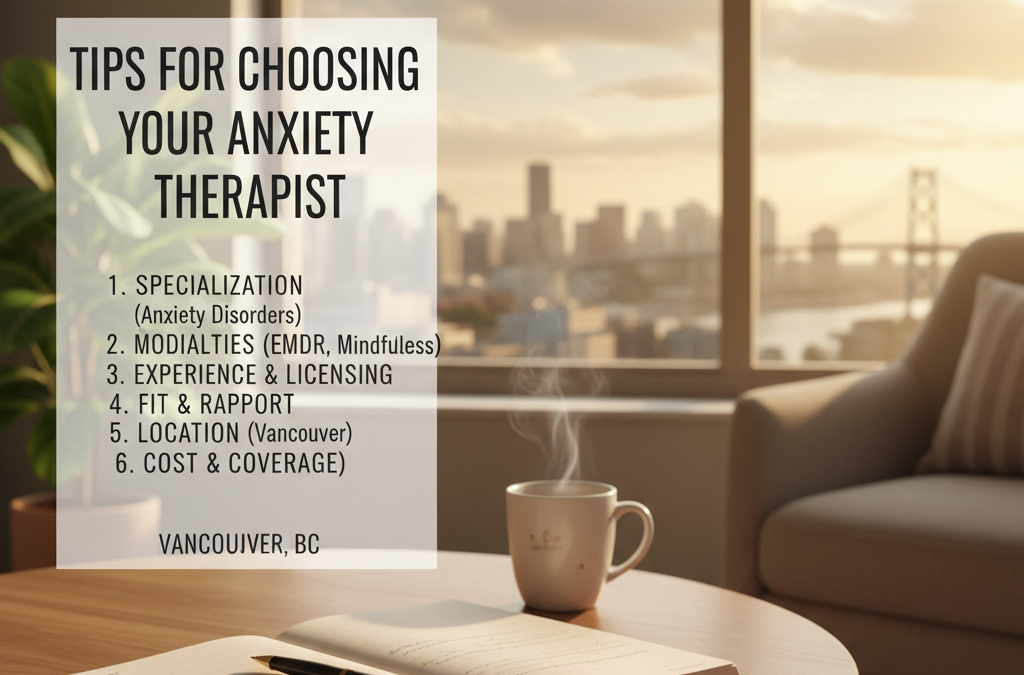
Choosing the right anxiety therapist in Vancouver can shape your overall healing journey. Look for therapists with specialized experience in anxiety disorders. Check their qualifications and certifications to ensure you are in capable hands. Personal comfort matters, so take time to assess if you feel understood during the initial session. Ask about their specific approach, such as cognitive-behavioral therapy or mindfulness-based therapy. Not all methods work for everyone, and your input helps shape your treatment.
Schedule a consultation before committing. This lets you gauge the therapist’s style and communication. Discuss your therapy goals and ask how progress will be measured. Many Vancouver therapists offer free or low-cost consultations, so take advantage of these opportunities. Use this time to check practical details like scheduling, fees, and whether they offer in-person or online sessions.
Building a Supportive Therapeutic Relationship
Therapy works best when there is trust and rapport. Choose a therapist who listens to your concerns and adapts to your pace. Open communication is important for successful outcomes. If you feel uneasy after several sessions, consider trying another therapist. Vancouver is home to many professionals, so do not hesitate to explore options until you find a good match.
Support networks can enhance your therapy experience. Ask your therapist about local resources, support groups, or workshops for anxiety. Having a community makes it easier to manage anxiety outside sessions. Some therapists may recommend books or digital tools to support your progress.
Making Your Choice with Confidence
Trust your instincts when choosing an anxiety therapist in Vancouver. Pay attention to how you feel during each interaction. Do research, read reviews, and seek recommendations if needed. Take time to reflect on what you need from therapy, and do not rush the decision.
Remember, the right therapist can make a significant difference in managing anxiety. With patience and careful consideration, you can find a therapist who aligns with your needs and helps you move forward.